

For the AgBot challenge I need a broad range of watermelons for testing. From the grocery stores I can get plenty of good quality ripe watermelons in various shapes and sizes but what about the immature ones? Or melons of unusual shape or color? For these I need a watermelon field but unfortunately it’s completely the wrong season. The solution: grow my own. Sounds pretty simple but we’ll see. The first stage is starting the seeds indoors hydroponically.
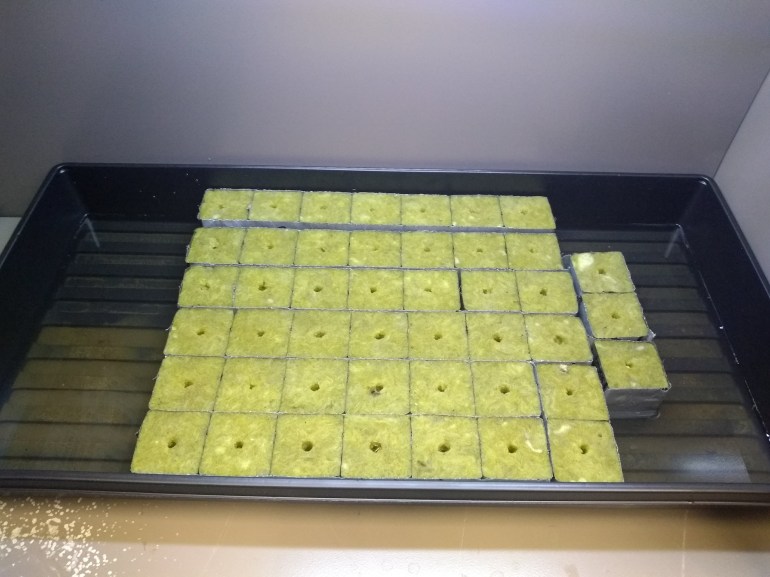
I started the melons in rock-wool cubes for hydroponics and a tray to keep the water. I found some bright white LED strips in lab 4 and mounted them above. The whole assembly is in the bottom shelf of the bookshelf by my desk. It wont last there but very convenient while everything is small.
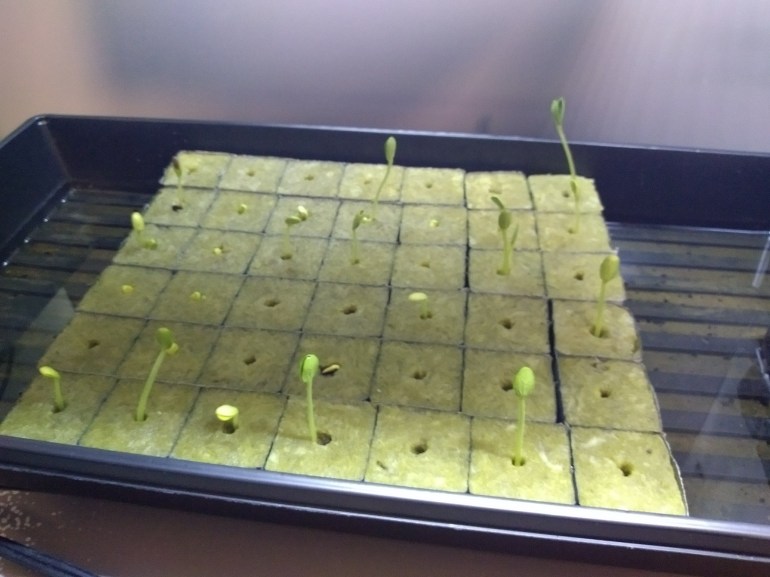
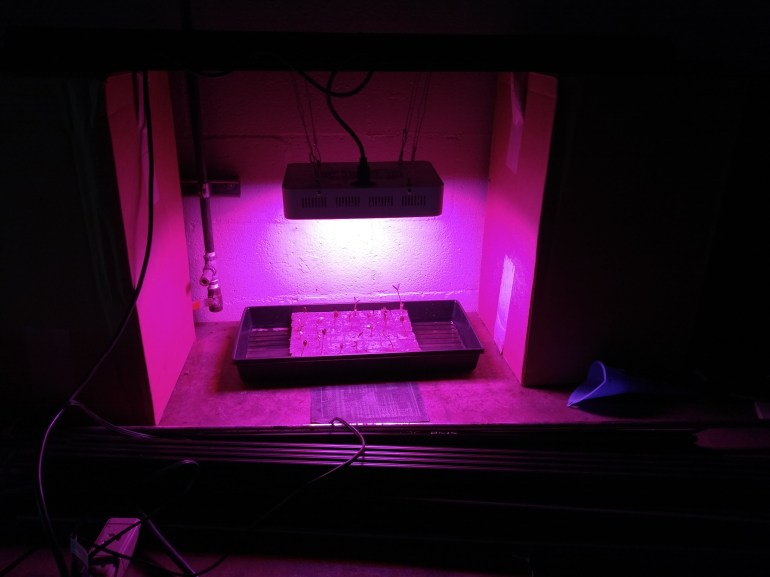
Now that the sprouts have grown a bit larger I added a large RED/BLUE grow light. I also borrowed a heating pad I should have had since day one and a teaspoon of hydroponic fertilizer. I expect the next few days will show some impressive growth.

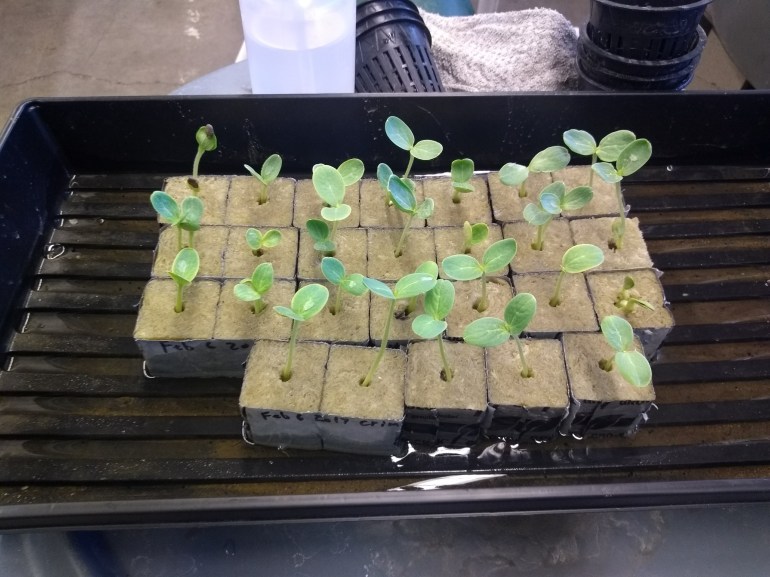
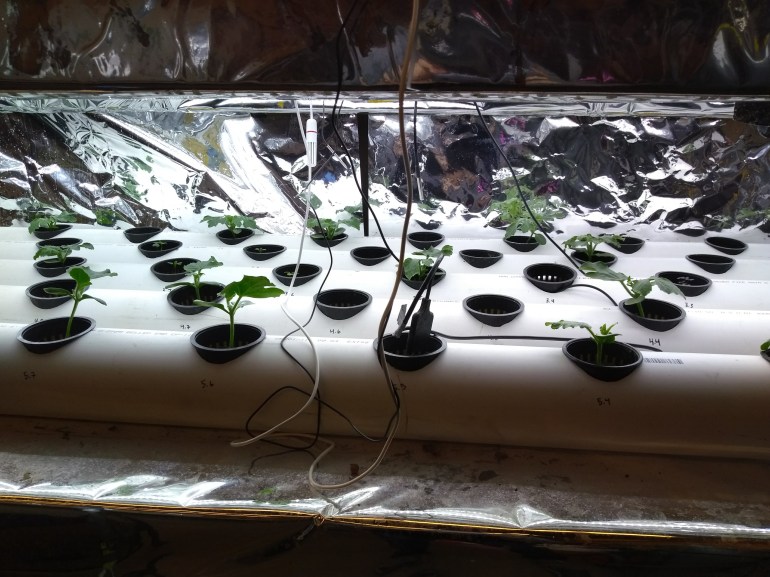
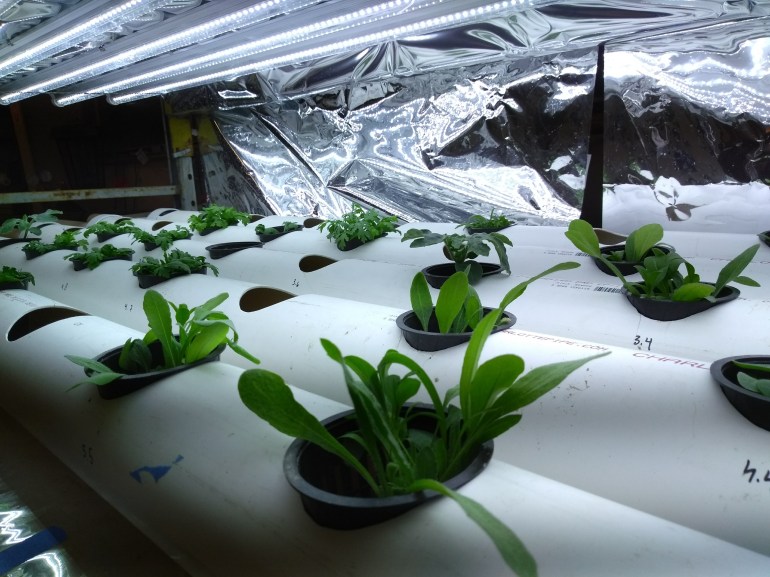
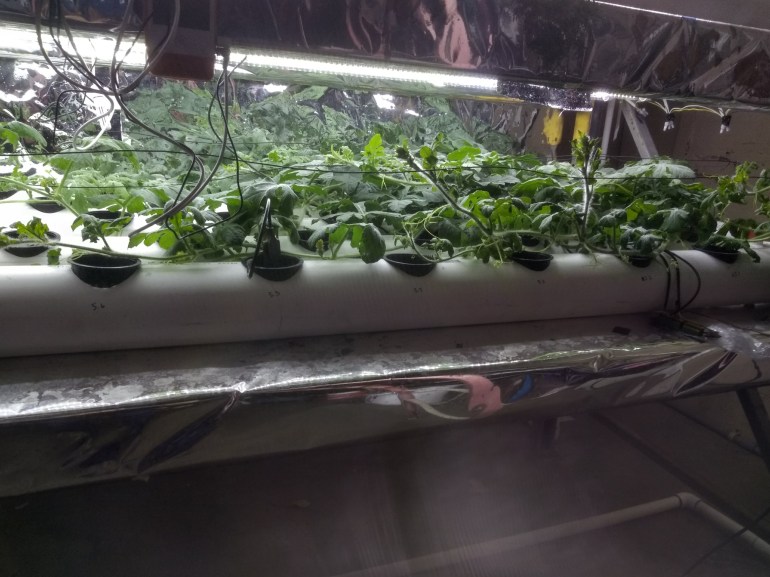
The watermelons are ready for transplant! since it’s still way too cold outside for watermelons to grow (they need around 70-80F for optimum growth and there was frost this morning) I’m putting them in the recently empty BRAE department hydroponics bay. Until recently the bay looked like this:


It was completely full of lettuce for other experiments. But as of last night all the lettuce is cleaned out and the bay is ready for a new crop. (Not my project but the lettuce experiment went stunningly, well above expected production. Way to go Sean!)
If the watermelons show even half the performance of these lettuce I’ll be extremely happy.
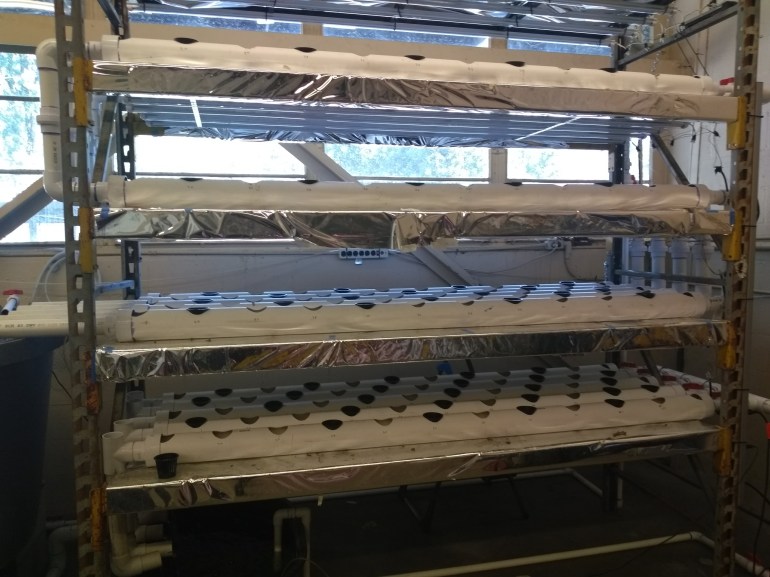
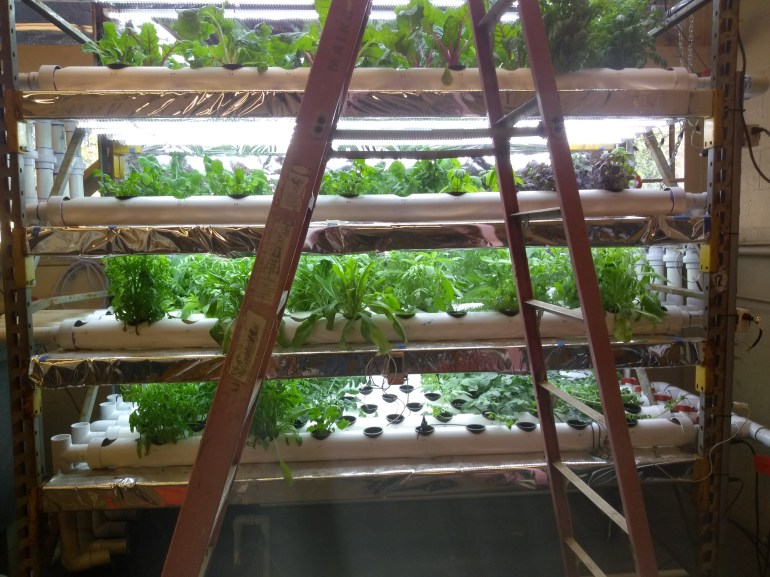
The top three racks of the bay are connected to an Aquaponics system housing nearly thirty fish of various types while the lowest rack is a pure hydroponics system. I’m only going to be using the lowest rack and there may end up being other plants interspersed with the watermelons as time goes by.


UPDATE! 3/8/2018 (DAY 28)
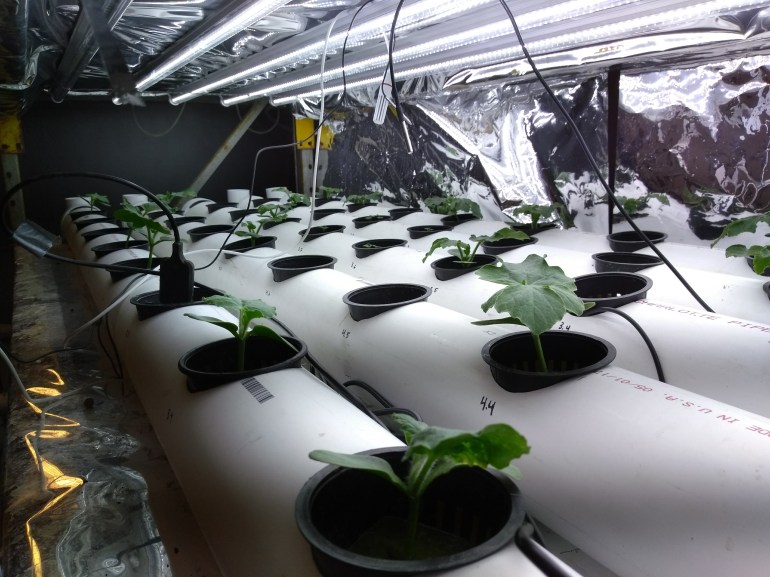
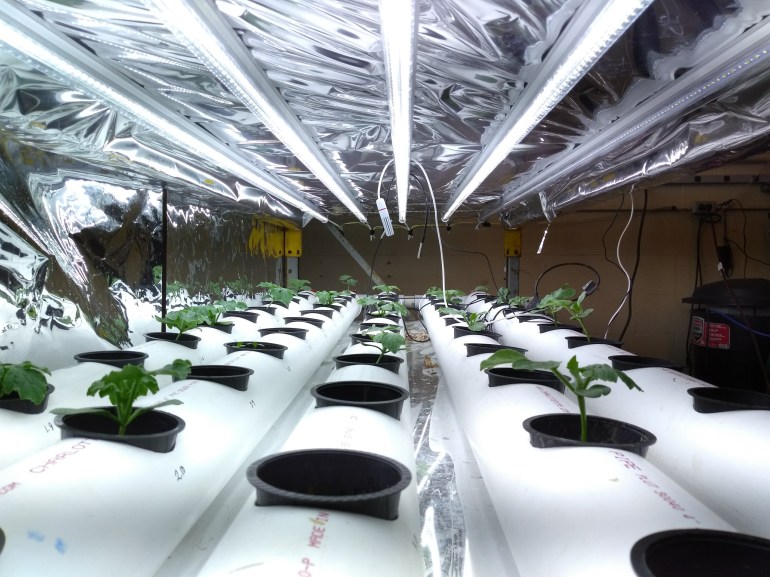
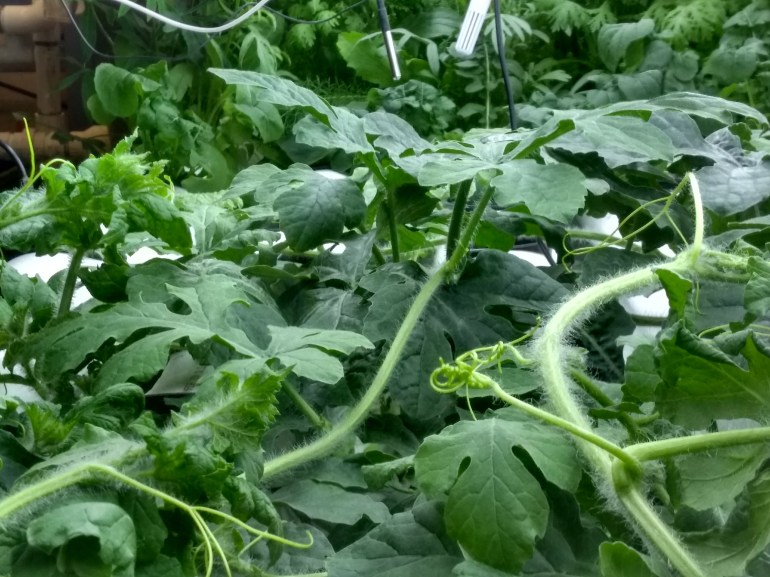
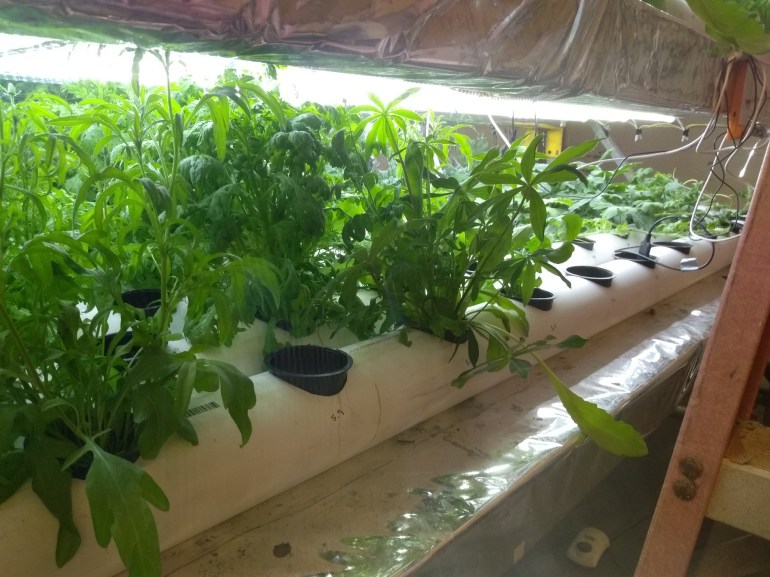
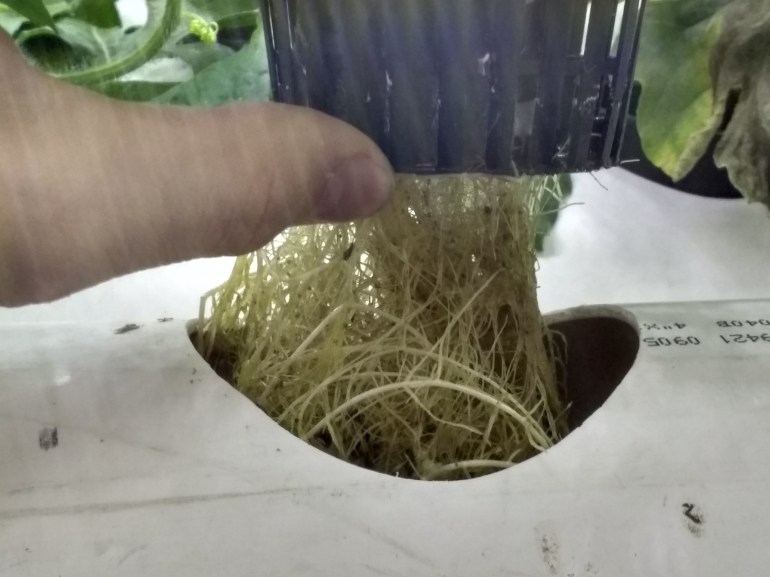
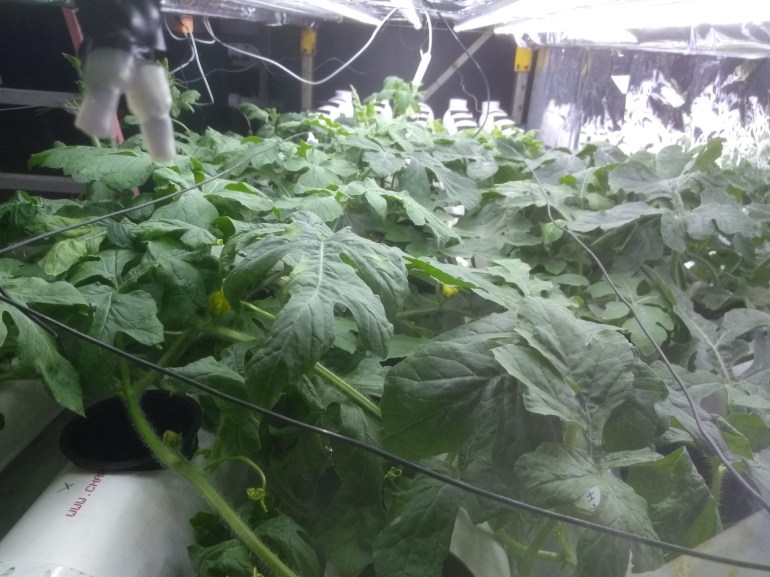
The Watermelons have been growing in the hydroponics bay for nearly two weeks now, we moved a few up to the aquaponics levels to see how they fare and set the lighting to an 18 hour day. The plant specialists Dr. Schwarts and Dr. Kuahara say this should give the plants just enough rest each night while optimizing photosynthesis. So far this timing has worked excellently but I’m in the process of setting up a primitive NDVI camera rig to try to really nail down the watermelon sleep cycle.
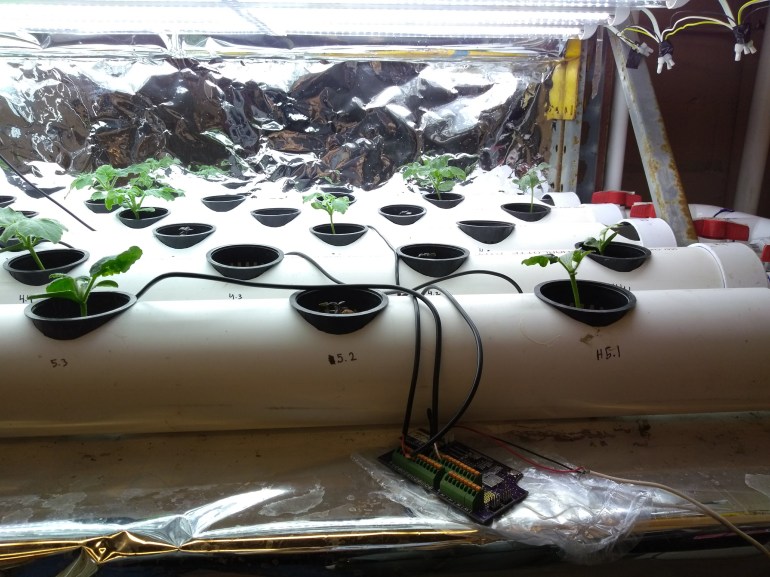
Thanks to Caleb Fink, a grad student I work with I’ve also added automated data logging for temperature of water and air as well as approximate electrical conductivity and dielectric coefficient This all uses Caleb’s system “SmartFarm” an IOT style remote data logger for orchards, and while it took nearly a week to get calibrated to hydroponics instead of soil SmartFarm is able to provide data measurements every ten minutes. This is of course in addition to daily measurements by the much more expensive manual sensors we have here in the lab.
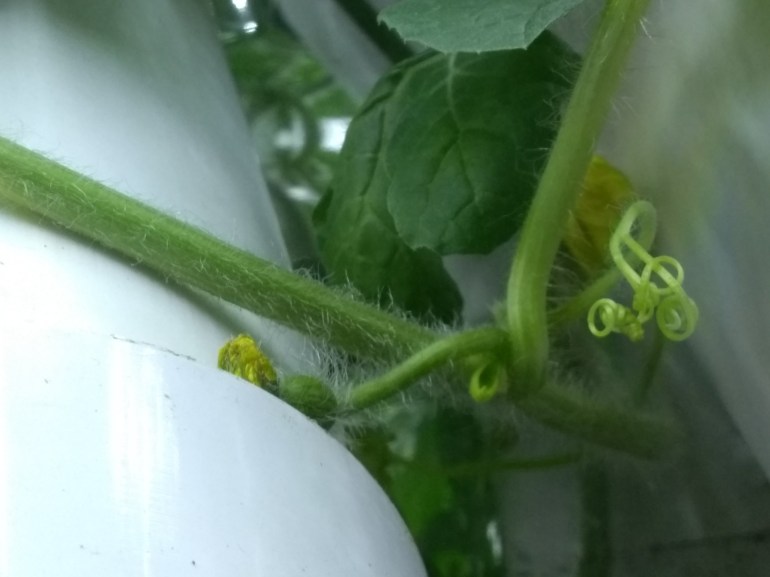
And the results are fantastic!
 Zachary Eagan